

A good night’s sleep is one of the simplest yet most powerful ways to restore our health, mood, and energy. Yet many of us struggle to fall asleep quickly, tossing and turning even after a long day. The good news? Improving your sleep hygiene—the set of small, healthy habits that prepare your body for rest—can make falling asleep easier and more natural.
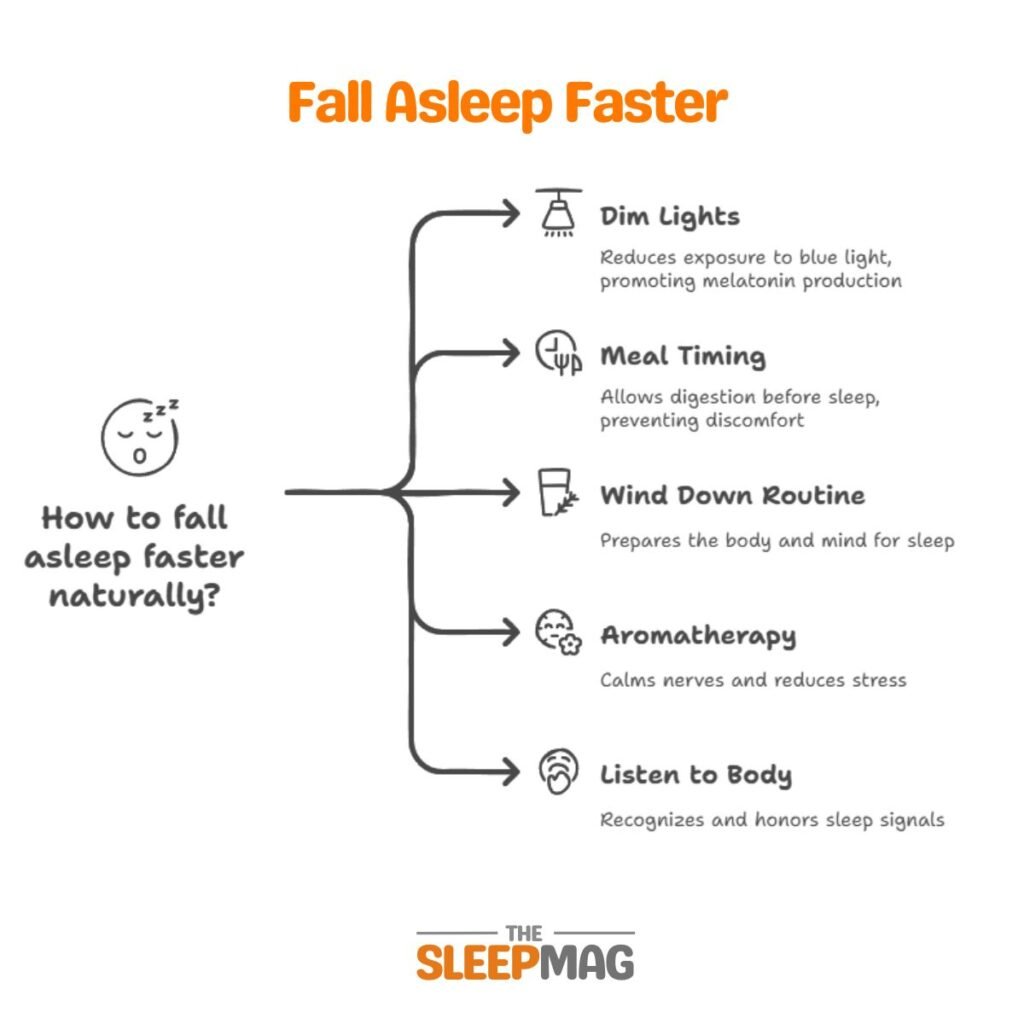
Here are five practical tips to help you drift off to sleep faster.
Dim the Lights in the Evening
Our bodies run on a natural rhythm known as the circadian rhythm, which is heavily influenced by light and darkness. Exposure to bright lights in the evening, especially from overhead bulbs, televisions, or phone screens; tricks the brain into thinking it’s still daytime. This suppresses the release of melatonin, the hormone that signals to the body that it’s time to sleep.
By dimming the lights around your house once the sun sets, you’re sending a clear signal to your brain: it’s time to slow down. Try switching to warm-toned lamps, candles, or salt lamps in the evening.
Even better, reduce screen time an hour before bed to give your body the darkness it needs to naturally prepare for rest.
Have Your Last Meal Three Hours Before Bed (and Brush Your Teeth)
Eating late at night can keep your digestive system working overtime, making it harder for your body to truly relax. Heavy meals close to bedtime may also cause discomfort, bloating, or acid reflux, all of which interfere with sleep.
A simple rule to follow: finish your last meal about three hours before bed. This gives your body enough time to digest food comfortably and shift into repair mode during the night. Brushing your teeth right after that meal also creates a subtle psychological cue—it signals to your mind that eating for the day is over and bedtime is approaching. This small ritual can reinforce a sense of closure and readiness for sleep.
Consciously Wind Down
Most of us expect to jump straight from a busy day into sleep mode, but the body doesn’t work that way. Just as we warm up before exercising, we also need to cool down before resting. A conscious wind-down routine acts like a bridge between the stresses of the day and the calm of the night.
This could mean taking a warm shower, practicing a short meditation, gently stretching, or journaling about the day. Even something as simple as sipping herbal tea or reading a book can help shift the nervous system into a state of relaxation. What matters most is consistency; by repeating the same ritual nightly, your body learns to recognize these actions as a prelude to sleep.
Use Aromatherapy to Calm the Nerves
Our sense of smell has a direct connection to the brain’s limbic system, the area that regulates emotions and relaxation. Certain scents are particularly effective in calming the nervous system and preparing the body for sleep. Lavender, chamomile, and sandalwood are well-known for their sleep-inducing properties.
You can use aromatherapy in several ways: diffuse essential oils in your bedroom, add a few drops to your pillow, or even take a warm bath with essential oil blends. The soothing fragrance works subtly, reducing stress and quieting racing thoughts, making it easier to fall asleep naturally.
Listen to Your Body’s Signals
One of the most important aspects of good sleep hygiene is listening to your body’s natural cues. Many of us ignore signs like yawning, heavy eyelids, or difficulty focusing because we want to finish “just one more” task.
Instead, head to bed when these signals first appear, and aim for a consistent sleep schedule. Your body thrives on rhythm, and honoring it helps you fall asleep faster.
Falling asleep faster doesn’t require complicated hacks or heavy medication.
Often, it’s about aligning your habits with the body’s natural rhythms. By dimming the lights, eating earlier, creating a wind-down routine, using calming scents, and respecting your body’s signals, you give yourself the best chance of enjoying restful, restorative sleep.
Better sleep hygiene not only helps you fall asleep faster, but it also ensures the sleep you get is deeply restorative.
Start with these small changes tonight, and your body will thank you in the morning.
Want to know the best time to go to bed and wake up for your body’s natural rhythm?
Try out our Free Sleep Calculator —it helps you plan your sleep cycles so you wake up feeling refreshed, not groggy.

A Certified Mindfulness Teacher and Sound Meditation Facilitator,
I bring over a decade of experience in guiding individuals and organizations toward mental clarity and emotional well-being.
Based in Mumbai, India, I have led hundreds of transformative sessions for corporates, educational institutes, and wellness retreats.
My work blends ancient practices with practical tools to help people reconnect with their inner stillness.
Visit my website www.GayatriSingh.com to know more about my work!


